


Ways to Build Trust During Car Service

A polished car-service experience is built through attentive answers, personalized greetings, honest updates, and credible social proof. Making a good impression with car service means helping each passenger feel recognized, informed, and at ease from the first interaction. Consistent, thoughtful communication matters as much as the ride itself.
It’s natural to judge a service by whether it feels reliable and personal, especially when travel plans depend on punctual, well-coordinated transportation. This article explains how to answer questions clearly, greet passengers in a way that feels individual, communicate changes with candor, and use reviews or testimonials responsibly. You’ll also see how these practices shape a more reassuring experience for airport transfers, business travel, and other scheduled journeys, so every interaction feels considered rather than routine.
Key Takeaways
- Listen without interrupting, answer in plain language, and follow up when a question needs more research.
- Use a passenger’s name when appropriate to make the greeting feel personal while keeping the interaction discreet.
- If plans change, communicate promptly, take responsibility, and explain the next step clearly.
- Use genuine testimonials and recognitions to support your claims, keeping social proof accurate and relevant.
1. Active listening and answering customer questions
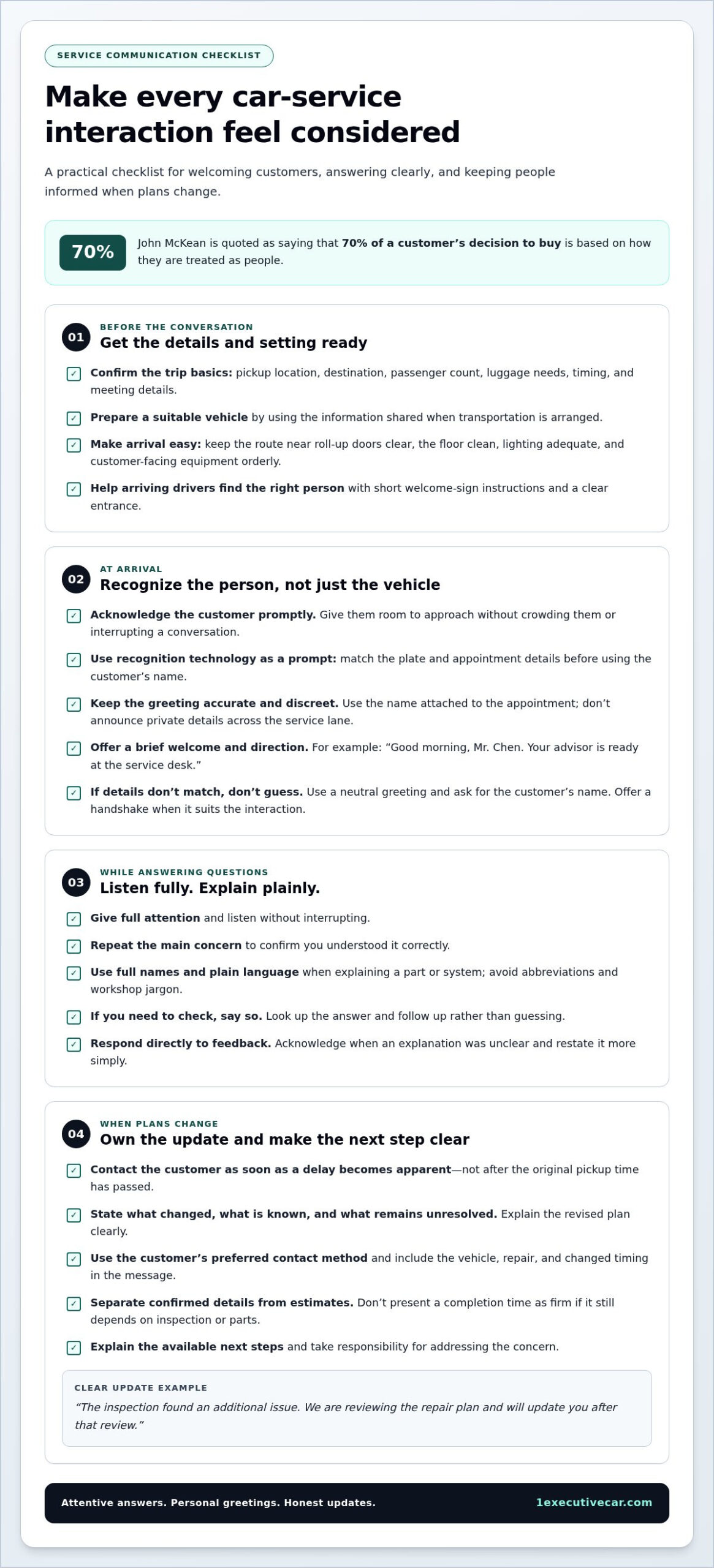
Making a good impression with car service starts before a customer reaches the counter. Greet arriving customers near the parking area, acknowledge them promptly, and offer a handshake when it suits the interaction. For an 8:00 AM appointment, a calm welcome and clear direction can make the opening moments feel organized. Give customers room to approach without crowding them or interrupting a conversation.
During the discussion, the advisor should give the customer full attention, listen without interrupting, and repeat the main concern to confirm understanding. If a customer asks about a repair, explain the part or system by its full name, then describe its function in plain language. Avoid abbreviations and workshop jargon. If an answer requires more information, say so plainly, look it up, and follow up with the customer rather than guessing.
Making a good impression with car service also means responding directly to customer feedback. If someone says an earlier explanation was unclear, acknowledge the point and restate the information more simply. If the customer is dissatisfied, explain the next step and take responsibility for addressing the concern. Clear commitments about the repair process and timing are more useful than broad assurances.
The service drive communicates before anyone speaks. Keep the route near roll-up doors clear, the floor clean, lighting adequate, and customer-facing equipment orderly. Empty trash receptacles and use short welcome-sign instructions to direct arriving drivers. These details help customers find the right person and make it easier for staff to see vehicle condition. A clean, visible entrance supports a composed handoff and gives the conversation room to begin well.
Respectful treatment can shape how customers view the service experience. John McKean is quoted as saying that 70% of a customer’s decision to buy is based on how they are treated as people.
When details are not immediately available, checking before responding and following up helps maintain trust. Plain-language explanations without jargon make repair information easier to understand, while taking responsibility for proper, timely work can reassure customers if they are dissatisfied.
2. License plate recognition and personalized greetings
License plate recognition can help staff recognize an arriving customer’s vehicle and prepare a personalized greeting. In a dealership service drive, the system can display a message that helps the advisor welcome the customer by name. A brief “Welcome back, Ms. Lee” feels more attentive than a generic sign. The technology supports the welcome, but the staff member makes it human.
Personalization works best when it is accurate and discreet. Use the name attached to the appointment, then greet the customer naturally rather than announcing details across the service lane. A message should identify the person or direct them to the right entrance, not reveal a repair concern or other private information. For example, “Good morning, Mr. Chen. Your advisor is ready at the service desk” is clear and useful.
Build a simple arrival routine around the recognition alert. First, let the assigned staff member know a vehicle has arrived. Next, match the plate and appointment details before using the customer’s name. Then offer a brief welcome and explain where to go. If the plate cannot be read or the appointment does not match, use a neutral greeting and ask for the customer’s name. This avoids an awkward misidentification and keeps the arrival moving.
Technology should make service more personal, not more intrusive. Keep the screen’s message concise, limit it to a greeting or direction, and make sure a staff member is ready to respond. For a traveler arriving at an airport, a human welcome can serve the same purpose. An airport meet and greet gives passengers a clear point of contact at the start of their journey, rather than relying on a screen alone.
Automotive service advisors can greet customers in the parking lot and shake their hands to make a good first impression. When the alert identifies an arrival, the advisor can step outside, offer a handshake where appropriate, and continue the welcome in person. Keep the interaction simple: confirm the customer’s name, make eye contact, and guide them toward the service desk. If the customer prefers not to shake hands, a warm verbal greeting still keeps the exchange courteous and personal. The screen can prompt attention, while the advisor sets the tone.
3. Taking responsibility for delays
A change to a pickup or arrival plan can unsettle a passenger’s schedule. The service provider should take responsibility for communicating rather than leaving the passenger to chase updates. Start by stating what changed, what is known, and what remains unresolved. For example, explain that traffic has affected the estimated arrival and clarify the revised plan.
Next, give the customer a practical choice where possible. Explain whether the vehicle can be collected safely, whether another repair step must happen first, or whether a revised pickup time is more realistic. When a disabled vehicle cannot be driven safely to the facility, coordinating with a dedicated provider like Dependable Towing & Recovery Services helps ensure secure transport and clear communication from the start. Avoid presenting an estimate as a firm commitment if the repair still depends on inspection or parts. A clear distinction between confirmed details and the next update helps the customer plan.
Contact the customer as soon as the delay becomes apparent, not after the original pickup time has passed. Use the customer’s preferred contact method and include the vehicle, repair, and changed timing in the message. A concise update might say: “The inspection found an additional issue. We are reviewing the repair plan and will update you after that review.” The message should not promise a completion time without a sound basis.
When offering a solution, explain the available next steps and their implications. If the customer needs transportation, describe relevant arrangements without implying that every option suits every situation. Record the agreed plan so another advisor can give consistent information if the customer calls again. One responsible point of contact reduces confusion during a changing repair timeline.
Customer concerns also need a timely response. Businesses should resolve customer concerns within 24 hours, and the advisor can acknowledge the issue while working toward a complete answer. If resolution takes longer, provide a meaningful progress update rather than repeating that the team is looking into it. After the repair, confirm whether the agreed action addressed the concern. This final follow-through shows that accountability continues beyond the delay itself.
4. Testimonials, awards, and social proof
A specific customer account gives prospective customers more to consider than a broad claim such as “excellent service.” For example, a testimonial might describe clear communication during a delayed pickup or a courteous driver during a business trip. Choose comments that explain what happened and how the service responded. A short, relevant detail helps readers understand the experience without suggesting every journey is identical.
Keep testimonials accurate and easy to interpret. Preserve the customer’s original meaning, correct spelling without changing the substance, and identify the context when the customer has agreed. A comment about an airport pickup should not be presented as evidence about an unrelated service. If feedback is edited for length, preserve the customer’s point and never combine separate comments into a quotation no one wrote.
Present customer feedback with precision. Identify the service or journey the comment concerns, and do not imply that one account guarantees the same outcome for every passenger. A testimonial offers a personal account, while practical details about the service help readers decide whether it suits their trip. These forms of information serve different purposes.
Present social proof with restraint. Place a relevant testimonial near the service information it discusses, and avoid unsupported superlatives or claims about typical results. Invite customers to share honest feedback after a journey, whether it was routine or required extra coordination. Respond professionally to criticism by acknowledging the concern and describing the practical next step, without disclosing private details. A measured response can demonstrate accountability to future readers.
For travel that depends on coordinated pickup and drop-off, review the point-to-point transportation details and consider how clear communication can support the journey from departure to arrival.
1Executive Car: DFW Car Service to Airport
1Executive Car provides DFW Car Service to Airport for travelers in Irving who value a composed, professionally coordinated departure. For arrivals, Car Service from DFW Airport supports the journey from the terminal to the next destination. These services are a practical fit for business travel, airport transfers, and plans where clear arrangements matter.
For local travel throughout the Irving area and nearby transit hubs, reliable sedan service offers another dependable transportation option. A Lincoln Continental can suit passengers seeking a refined vehicle for an individual trip or business engagement. Choosing a scheduled car service can also make it easier to coordinate pickup details and communicate preferences in advance.
Thoughtful service begins with clear communication and attentive coordination. Contact 1Executive Car to discuss your airport transportation needs.
Make Your Next Journey Feel Considered
Trust is shaped by the details passengers experience before, during, and after a journey. Applying the principles behind making a good impression with car service means treating each interaction as part of the travel experience, not as a separate transaction. Clear expectations and thoughtful coordination can help you begin a trip with greater peace of mind.
For airport travel, 1Executive Car offers DFW Car Service to Airport and Car Service from DFW Airport. A Lincoln Continental is also available for passengers seeking a refined sedan. These options provide a practical next step when you want professional transportation to support your travel plans.
Consider what would make your next journey feel well coordinated, from the pickup to the arrival. Contact 1Executive Car today to discuss your transportation needs, and take the next step toward a more composed travel experience.


